
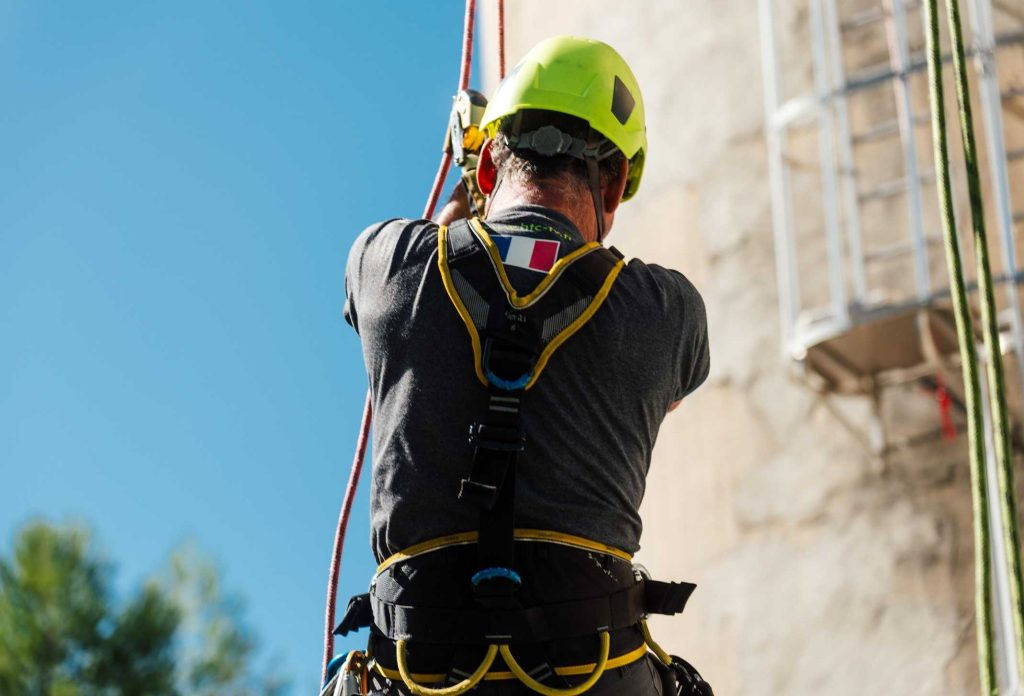
Work at height requires a comprehensive approach to ensure the safety of workers and the compliance of installations.
HTC Techniques Verticales, an expert organisation in safety and fall prevention, provides inspection, regulatory compliance checks and technical support for your equipment: lifelines, anchor points, guardrails, cage ladders and fall arrest systems.
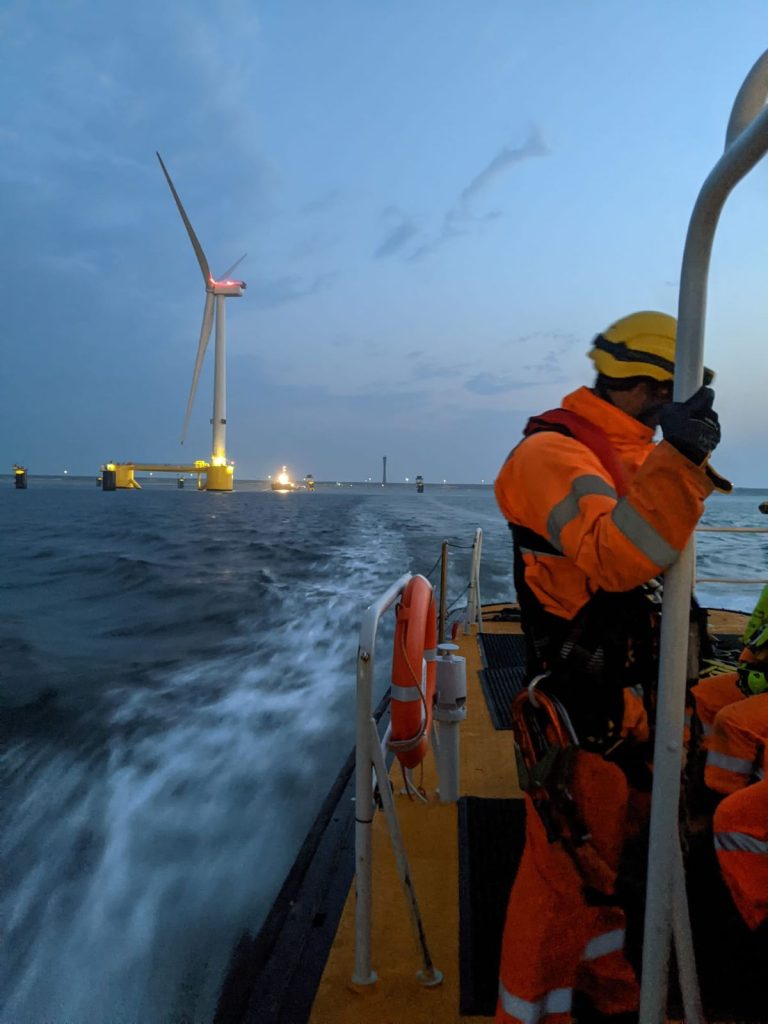
Services for all types of structures: industrial buildings, wind farms, telecoms, solar power and commercial premises.
Work carried out in accordance with standards EN 795, EN 365 and the Labour Code.
HTC supports you in ensuring the safety and compliance of your working-at-height installations, from the initial assessment through to the submission of the technical report.
Services:
Our qualified technicians work on site, in France and abroad.
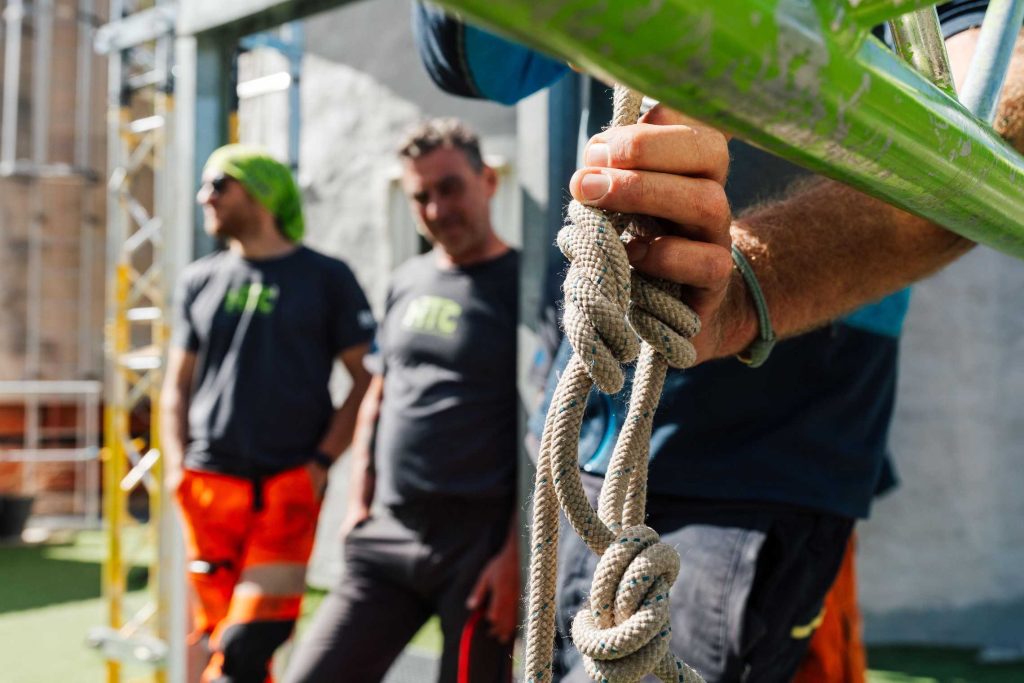
Standard EN 795:2012 defines five classes of anchor points based on their design and intended use.
Each anchor point must be identified, inspected and maintained in accordance with its original technical specifications.
| Class | Description |
|---|---|
| A | Fixed anchor point on structure. |
| B | Temporary or portable anchor. |
| C | Horizontal flexible lifelines. |
| D | Horizontal rigid rails. |
| E | Deadweight anchors (ballasted). |
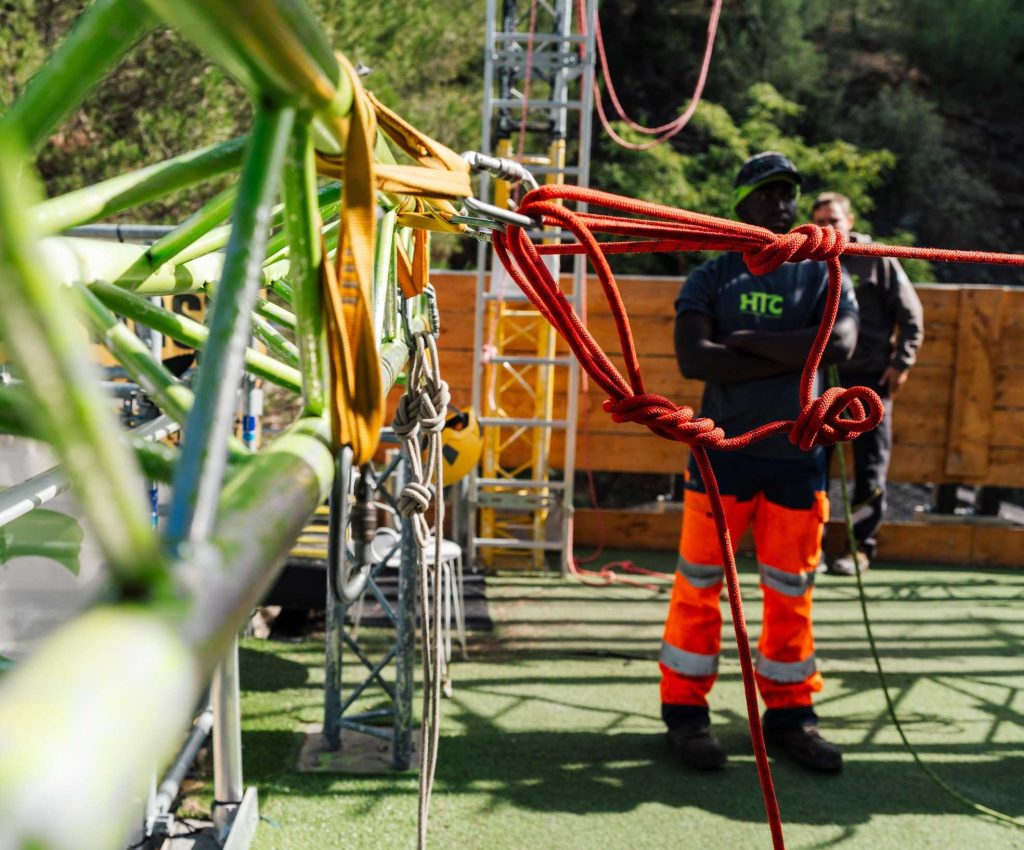
Height safety equipment must be inspected upon installation and then at least once a year, in accordance with the Labour Code (Articles R4323-99 to R4323-104).
The EN 365 standard also requires that each anchor point indicates the maximum number of users, the type of connection permitted, the required clearance, and that a pictogram specifies that it is for use with fall protection PPE only.
These inspections ensure the safety of operators and the compliance of equipment with current European standards.
HTC Techniques Verticales: your one-stop partner for safety, training and compliance in the workplace at height.